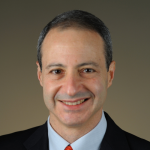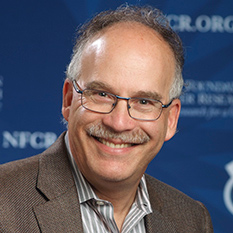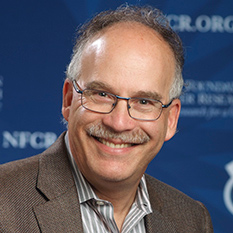
Dr. Haber is a renowned leader on genetic abnormalities of cancer – from inherited mutations (with familial predisposition) to mutations that are acquired by tumors themselves. With NFCR funding since 2000, his research aims to guide targeted drug therapies.
Focusing on circulating tumor cells (CTCs) that are shed from a primary tumor and metastatic sites and then enter the bloodstream, he and his collaborators developed the CTC-iChip—an advanced micro-engineered device that captures the few CTCs lurking between the millions of healthy cells in a standard blood sample from a patient.
Their research has developed methods to culture viable CTCs to increase their numbers, conduct genetic testing and other tests, which results can dramatically improve treatment and diagnosis for patients with many types of cancers.
The CTC-iChip is already used in some clinical research laboratories and will be submitted for FDA-approval. Oncologists can then use the blood test to obtain results to make timely life-saving treatment decisions for their patients.
In a new collaboration with NFCR-supported scientist Dr. Esther Rheinbay also at MGH, their research is confirming a target to develop a new treatment for the most deadly subtype of breast cancer, triple-negative breast cancer (TNBC). Overexpression or amplification of the Androgen Receptor (AR) occurs in 10% of TNBC. Unlike prostate cancer, AR expression abnormalities do not respond to anti-androgens. Dr. Haber’s team is obtaining sequencing and ‘omics data’ (DNA or genomic and RNA or transcriptome) from patients’ CTCs with and without AR abnormalities. Dr. Rheinbay’s lab analyzes the omic data to identify genes, transcription factors, and DNA regulators that contribute to the lack of response of anti-androgens. Their work may identify new targets that could lead to a treatment option and give patients with TNBC the hope they need.