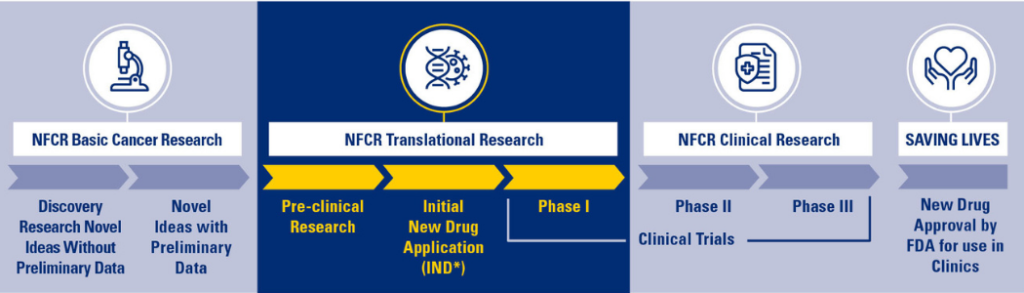
Translational research includes two areas of translation:
- Applying discoveries generated during research in the laboratory and in preclinical studies to the development of trials and studies in humans.
- Enhancing the adoption of best practices in the community to achieve cost-effectiveness in prevention and treatment strategies.
Ultimately, translational research is part of a continuum in which research findings are moved from the researcher’s bench to the patient’s bedside and community.
The traditional focus of NFCR research funding has been to support innovative basic science cancer research at universities and research hospitals. We are now at the fruition point of the past several decades’ advances of genomic-based research, with so many innovations waiting to go into commercialization.
However, unless and until we can bring these innovations into the clinic to gain FDA approval, next-generation cancer therapies, diagnostics, and prevention strategies will remain at the bench, and this is why NFCR has launched the AIM-HI Translational Research Initiative as a new model to bridge the so-called “valley of death”.