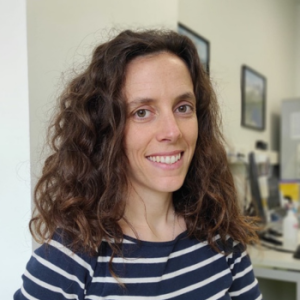
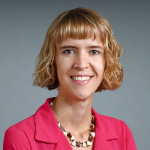
Portrait of Francesca Bersani, Ph.D.

Francesca Bersani, Ph.D.

Assistant Professor of Biochemistry

Department of Oncology · University of Torino, Italy

Cancer types supportedLung Cancer

Research projects

What their NFCR-supported work is changing

Support this research team

A major hurdle towards improving treatment paradigms for SCLC patients, who rarely undergo routine biopsy, is due to the limited availability of tumor samples for detailed analysis and molecular characterization. Circulating tumor cells (CTCs), namely the metastatic cells which leave the organ of origin and spread around the body through the bloodstream, represent an innovative, accessible and relevant source of material to explore SCLC biology.

Dr. Francesca Bersani and her team will collect SCLC-CTCs to study the molecular features of these metastatic cells. A first of its kind biobank of SCLC CTC cultures will also be generated to further investigate organ-specific pathways responsible for their metastatic seeding to distant sites. It is the first time that such an approach is applied to SCLC.

Impact

This research will allow a better understanding of how the tumor changes in response to treatment. Understanding what drives the preferential destination of metastatic cells to certain organs may help clinicians to choose more tailored therapies and follow-up protocols, and scientists to develop better therapeutic strategies to reduce recurrence of SCLC and improve the overall survival.
Background

The path to this work

Francesca Bersani, Ph.D. conducted doctoral training in Molecular Medicine, University of Torino and completed her doctorate at the Rockefeller University where she identified and functionally characterized a cancer-related microRNA. She received post-doctoral training in Dr. Daniel Haber’s lab at Massachusetts General Hospital Cancer Center, focusing on the microenvironment of the metastatic niche in the crosstalk with CTCs and on the impact of tumor-specific satellite repeat expression on the evolution of the cancer genome.

She was a R&D staff scientist in the environmental microbiology field in a private corporation, before returning to academic research as Assistant Professor of Biochemistry at the Department of Oncology, University of Torino. Her lab is mainly dedicated to elucidating the molecular circuits activated in relapsed lung cancer, specifically considering the contribution of non-coding RNAs. Dr. Bersani is part of a large collaborative effort together with thoracic oncologists and pathologists in Department of Oncology to generate, characterize and exploit a biobank of patient-derived metastatic lung cancer organoids.

Research support

Sorenson Legacy Foundation

The National Foundation for Cancer Research wishes to thank the Sorenson Legacy Foundation for its generous support to expand on this critical research initiative.

Accelerate innovative research like this

Your gift helps NFCR-supported scientists pursue the discoveries that save cancer patients' lives.