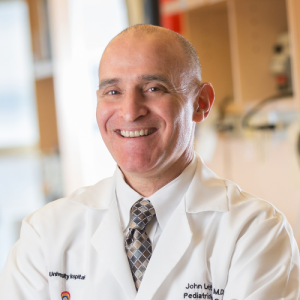
Dr. John Letterio’ research focuses on cancer biology, immunoregulation and development of immunotherapies. His lab has made significant discoveries in signaling molecules at the interface of inflammation and cancer and in immune system modulators.
His immune system expertise is an excellent complement to the molecular imaging and image guided surgery expertise of Dr. James Basilion. Diagnostics and therapy together in one agent is called ‘theranostics’, and their NFCR-supported collaborative research aims to improve the tumor killing power of a theranostic probe developed by Dr. Basilion.
Applied during surgery to the tumor site, the theranostic probe binds to PMSA molecules on the surface of cancer cells. With light, the probe fluoresces allowing surgeons to better visualize remaining cancer cells – called Fluorescent Image Guided surgery (FIGS). Applying light to PMSA also triggers it to kill cancer cells – a process called photodynamic therapy (PDT).
The collaborative research is investigating how the dose and time of light may also stimulate or suppress an immune response in lab models of triple negative breast cancer. Dr. Letterio will monitor the immune system’ response and targeted agents will be given to suppress or stimulate the immune system as needed to achieve the best outcome on killing the primary tumor and on the deadly spread of the cancer.
Impact
Effectively treating cancer requires a multipronged approach. This collaborative effort will combine FIGS, PDT, and immune modulating therapies into a single disease management paradigm. The research can provide a more robust and tailored therapy and positive outcome for patients undergoing surgery for triple negative breast cancer and many other cancer types.